

Brazil has a diverse furniture industry, an established supply chain, access to timber from planted forests and the manufacturing capabilities required to serve a wide range of market segments. Yet its presence in global furniture trade remains below what its industrial potential would suggest.
For furniture industry specialist Angelo Duvoisin, the explanation begins with a fundamental distinction: manufacturing well and exporting successfully require different capabilities. Rather than simply increasing export volumes, Brazilian manufacturers need to develop products for specific markets, establish lasting commercial relationships and build international recognition around qualities that extend beyond price.
In this interview with Brazil Furniture & Design, Duvoisin discusses Brazil's competitive strengths, the expectations of international buyers and the opportunities to establish a stronger position in global furniture markets.
Brazil has a substantial furniture industry. Why does it still account for a relatively small share of international trade?

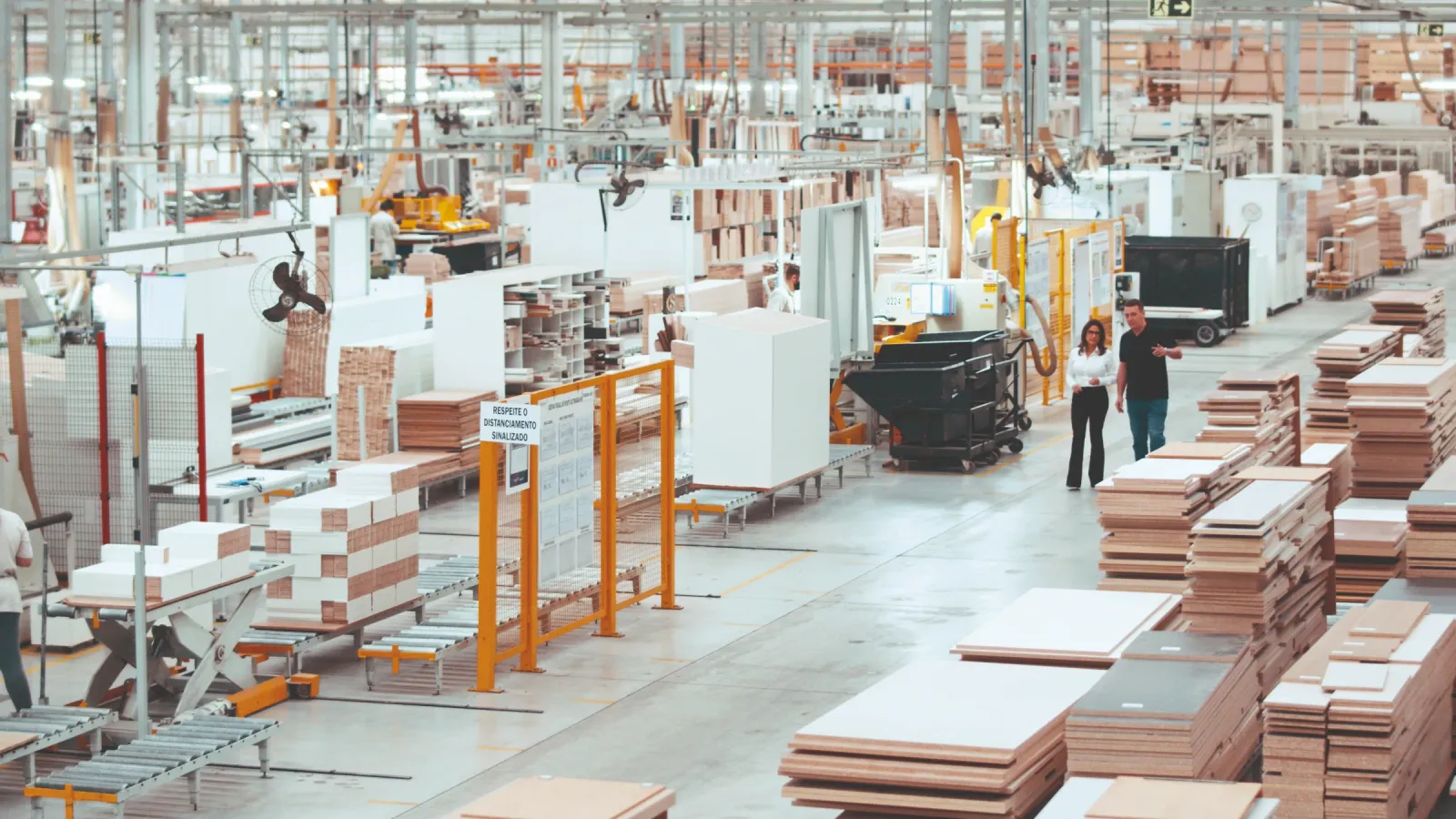
Brazil's furniture industry is far more developed and diversified than its share of global trade might suggest. We have established manufacturing clusters, technology, skilled professionals, product development capabilities and a comprehensive supply chain.
But manufacturing well and exporting successfully are two different things.
Many companies still regard exports as a supplementary activity rather than a permanent part of their business strategy. Internationalisation requires an understanding of consumers, product adaptation, appropriate pricing, compliance with market requirements and a consistent commercial structure.
We also face challenges involving logistics, taxation and bureaucracy. However, one of the most important issues is recognising that a product developed for Brazilian consumers cannot simply be introduced into another market without adaptation.
Every market has different dimensions, lifestyles, design preferences, distribution channels and expectations.
Brazil knows how to manufacture furniture. The next step is to turn that industrial expertise into an international product and market strategy.
What are the strongest reasons for an international buyer to consider Brazilian furniture?
I would highlight three major strengths.
The first is the combination of renewable raw materials and industrial capacity. Brazil has an extensive production chain supported by planted forests, particularly pine and eucalyptus, and manufacturers capable of transforming these materials into products of varying levels of complexity.
The second is product development and flexibility. Brazilian manufacturers can adapt dimensions, materials, finishes and individual projects, as well as accommodate different production volumes. This can be particularly attractive to buyers looking for customised solutions.
The third is differentiation. Brazil has creativity, industrial expertise and the ability to develop products with their own identity.
International buyers should not see Brazil simply as another sourcing option. They can also see it as an opportunity to discover new products, design approaches and market possibilities.
Can design help establish a recognisable international identity for Brazilian furniture?
Absolutely. International buyers may be familiar with individual Brazilian companies, but Brazilian furniture has yet to establish the same clearly recognisable identity associated with certain other countries.
That does not mean we lack quality. It means we need to strengthen our positioning.
Brazil can build an international identity around design, creativity, responsibly sourced timber, technology, innovation and industrial expertise. We do not need to imitate other countries. We need to develop our own design language.
Design must also become part of the strategy from the very beginning, rather than being treated simply as a final stage concerned with appearance.
We need to understand the consumer, the environment in which the furniture will be used, pricing, packaging, logistics and distribution channels. A product developed for the United States will not necessarily have the same characteristics as one intended for Europe or the Middle East.
When design, engineering, manufacturing and commercial teams work together, the result is a product that responds more effectively to the needs of its market.
That is when design becomes a competitive advantage rather than simply a cost.
Is price still the deciding factor for international buyers?
Price remains important. It would be a mistake to suggest otherwise. But it is only one part of the purchasing decision.
Buyers also want to know where a product comes from, whether a supplier can maintain consistent deliveries, adapt designs, meet market requirements and support a business relationship over time.
Traceability, environmental compliance, flexibility, product development and security of supply have become increasingly important.
International buyers are not simply looking for factories. They are looking for reliable supply partners.
I also believe it is risky to build a business strategy entirely around customers whose main priority is the lowest possible price. A manufacturer may achieve substantial sales volumes while putting its profitability at risk.
Brazil does not need to become the world's cheapest furniture supplier. It needs to be recognised as a country that delivers value for the price it charges.
As global trade changes, which markets should Brazilian manufacturers prioritise?
The United States remains an extremely important market because of its size and purchasing power. However, Brazilian manufacturers should not concentrate their entire international strategy on a single destination.
I see three important areas of opportunity.
The first is maintaining a presence in the United States, focusing on products and segments where Brazilian manufacturers can remain competitive.
The second is developing opportunities in Europe, particularly for higher-value furniture distinguished by design, responsibly sourced timber and product differentiation.
The third is diversification, including Latin America, the United Kingdom, the Middle East and other markets where the balance between product, price, logistics and positioning makes commercial sense.
Changes in tariffs and the restructuring of global supply chains have reinforced the importance of diversification.
The objective should not be to select one market above all others, but to develop a balanced international customer portfolio that reduces dependence on individual destinations.
What must the Brazilian furniture industry do to achieve a stronger international position over the coming years?
We need to make progress on several fronts simultaneously.
First, internationalisation must become a permanent business strategy. Attending a trade fair and collecting a few contacts does not mean a company has established a market. The most important work begins afterwards: developing products, sending samples, negotiating terms, following up with customers and maintaining a commercial presence.
Exporting is not about securing an isolated order. It is about building relationships.
We also need to invest in design, develop products for different consumers, diversify our markets and support the environmental credentials of our supply chain with verifiable information, traceability and certification.
Another major challenge is establishing an international identity for Brazilian furniture.
We have raw materials, manufacturing capacity, technology, designers and industrial expertise. What we need now is to bring these strengths together within a coherent international strategy.
The challenge for the coming years will not be proving that Brazil knows how to manufacture furniture. We have already demonstrated that.
The challenge will be ensuring that the world recognises Brazil as a country capable of designing, developing and delivering competitive, desirable and sustainable furniture for different markets.

THREE REASONS TO SOURCE FURNITURE FROM BRAZIL
1. Industrial capacity and renewable materials
A diversified manufacturing base supported by access to timber from planted forests.
2. Flexibility and product development
Manufacturers capable of adapting dimensions, materials, finishes and projects to meet the needs of different buyers.
3. Design and differentiation
Creativity and industrial expertise to develop furniture that offers identity, quality and value beyond price.


Comentarios (0)
Aún no hay comentarios. Sé el primero.